
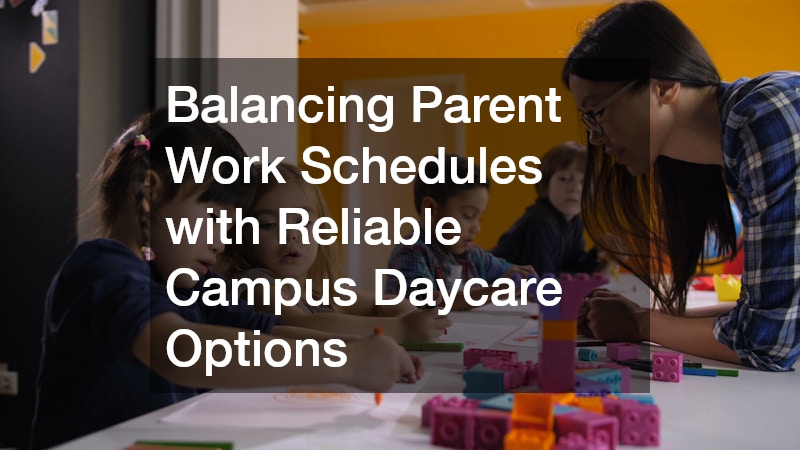
For working parents, the morning scramble to get kids ready and out the door often feels like a logistics puzzle with no clean solution. When job schedules shift, commutes stretch, or meetings run late, finding childcare that can flex with real life becomes just as important as finding childcare that is safe and nurturing. This article walks through how to evaluate campus daycare options, align them with your work schedule, and build a backup plan so you are never caught without care on a hectic Tuesday morning.
Assess Your Work Schedule Before You Start Searching
Before touring a single facility, take an honest look at your weekly work pattern, including start times, end times, and how often your schedule actually changes. Many parents underestimate how much variability exists in their week until they map it out on paper or a shared calendar. This step helps you narrow your search to only those daycare providers whose hours realistically match your life, saving you from signing up somewhere that looks great on paper but falls apart by week two.
Consider not just your typical day but your worst-case day, since that is usually when childcare gaps cause the most stress. Think through scenarios like early meetings, late shifts, or unexpected overtime, and note how often those situations occur in a normal month.
- Track your actual clock-in and clock-out times for two full weeks
- Note any recurring late nights, early mornings, or weekend obligations
- Identify how far in advance your schedule is typically posted
- Ask your employer about flexibility for pickup emergencies
- Write down your commute time to and from the campus location
Compare Campus Hours and Drop Off Windows
Campus-based child care centers, often located on or near a college, hospital, or corporate campus, frequently offer extended hours that align with shift work or academic schedules. These programs can be especially useful for parents who work irregular hours, since many campus locations were originally designed to serve students, faculty, or shift-based staff. Before enrolling, ask directly about opening and closing times, grace periods for late pickup, and whether early drop-off is available for parents who start work before sunrise.
It also helps to ask how the center handles seasonal changes, since campus programs may adjust hours around academic breaks or holidays that do not match your own employer’s calendar. A mismatch here can leave you scrambling during weeks you assumed would be business as usual.
- Confirm exact opening and closing times, not just general hours
- Ask about late pickup fees and grace periods
- Check whether hours change during school breaks or holidays
- Find out if weekend or evening care is ever available
- Ask how far in advance schedule changes are communicated to families
Evaluate Staff Training and Health Preparedness
A campus care program’s schedule only matters if the care itself is safe and well run, so it is worth asking pointed questions about staff qualifications. Reputable centers should be able to describe their hiring standards, ongoing training requirements, and how they keep up with health and safety protocols. This includes practical details like how staff are trained to administer medication, respond to allergic reactions, or handle injectable training for situations such as epinephrine auto-injector use in a child with severe allergies.
Do not hesitate to ask a director directly how often staff refresh these certifications, since requirements and best practices change over time. A center that treats this as a routine, well-documented part of operations is generally a good sign of overall professionalism.
- Ask about staff-to-child ratios during peak hours
- Request details on CPR and first aid certification schedules
- Confirm how allergy and medication protocols, including injectable training, are documented
- Ask how new staff are trained before working unsupervised
- Find out how incidents are reported to parents
Understand Enrichment Programming and Daily Curriculum

Reliable hours matter, but so does what actually happens during the time your child spends in care. Many campus centers now market themselves as an enrichment daycare, meaning the daily schedule includes structured activities like early literacy, music, movement, and basic STEM exploration rather than simple supervised playtime. This kind of programming can make the childcare decision feel less like a compromise and more like an investment in your child’s development.
When touring a facility, ask to see a sample weekly schedule so you understand the balance between free play, structured lessons, meals, and rest time. It is also reasonable to ask how teachers adjust activities for different age groups within the same classroom.
- Request a printed or digital sample of the weekly curriculum
- Ask how outdoor time and physical activity are incorporated
- Find out whether specialists teach music, art, or language sessions
- Ask how progress or milestones are communicated to parents
- Confirm how screen time, if any, is used during the day
Build a Backup Plan for Schedule Disruptions
Even the best-laid arrangements will occasionally fall through, whether due to a sick day, a facility closure, or a sudden schedule change at work. Parents who build a backup plan before they need it tend to handle these disruptions with far less stress than those scrambling in the moment. Start by identifying a short list of trusted people or services you could call on short notice, and keep their contact information somewhere easy to find.
It also helps to talk with your employer proactively about how schedule changes are communicated, since more notice on your end gives you more time to arrange backup care. A little preparation here can prevent a single disrupted day from turning into a missed shift or a stressful scramble.
- Identify two or three backup caregivers before you need them
- Ask your care provider about drop-in or flexible day options
- Keep a stocked bag ready for last-minute drop-offs
- Save your care center director’s direct contact information
- Discuss schedule change notice periods with your employer
Balancing a demanding work schedule with dependable childcare is rarely a one-time decision, it is an ongoing process of checking that your care arrangement still fits your life. Start by mapping your actual work hours, then compare those honestly against the daycare options available near your campus or workplace. Ask specific questions about staff training, daily programming, and backup options before you commit, so you can move forward with confidence rather than guesswork.