
The earliest years of a child’s educational journey represent a period of profound curiosity, sensory discovery, and steady physical growth. Long before formal academics enter the conversation, toddlers spend their days observing daily routines, absorbing spoken language, and discovering how to interact with their immediate environment. For many working families, this foundational chapter begins when an infant or young toddler enters an early care environment outside the home. Selecting a quality daycare requires careful thought regarding caregiver responsiveness, safety standards, daily schedules, and emotional warmth. At this early stage, learning does not happen through workbooks or rigid drills. Instead, meaningful education occurs through sensory bins, finger painting, music, outdoor exploration, and shared story times that spark wonder.
Consistency between the home routine and the care setting helps young toddlers build a secure attachment as they navigate their very first experiences of separation from parents. Experienced early caregivers establish predictable rhythms for morning drop-offs, balanced meals, restful naps, and unstructured play. This regular schedule helps young children develop internal feelings of security and order. During these initial years, children also begin learning how to take turns with favorite toys, communicate basic needs through emerging speech or gestures, and observe other children at play. When parents maintain proactive communication with early teachers, they gain valuable insight into their child’s unique social inclinations. A nurturing early care program gives children a dependable platform for every classroom experience ahead.
- Tracking Developmental Milestones and Emotional Regulation
- Entering Structured Classrooms in Early Childhood
- Embracing Dual Language Immersion for Cognitive Flexibility
- Establishing Academic Groundwork in the Primary Grades
- Sustaining Academic Momentum and Curiosity Across Breaks
- Navigating the Middle School Shift and Changing Academic Needs
- Considering Independent Secular Academic Environments
- Stepping Up to the Demands of Secondary Education
- Structuring Advanced Pathways for University Readiness
Tracking Developmental Milestones and Emotional Regulation
As children approach their second and third birthdays, their cognitive, linguistic, and emotional worlds expand at an astonishing rate. This phase marks an essential transition from solitary play to early social awareness, where toddlers begin showing curiosity about what other children are doing around them. Viewing these behaviors through the lens of child development allows caregivers to balance patient structure with independence. During these formative years, toddlers are actively testing physical boundaries, discovering their personal likes and dislikes, and learning how to manage frustration when tasks prove difficult or when desires are delayed.
Developing true emotional regulation takes years of practice, and young children rely heavily on calm adults to model positive coping strategies. Simple daily practices, such as naming emotions out loud, reading picture books about feelings, and creating quiet spaces for rest when sensory overstimulation occurs, make a substantial difference. Concurrently, gross motor skills expand as toddlers run, climb, and balance, while fine motor control develops through block stacking, scribbling, and manipulating puzzle pieces. Understanding common developmental markers allows families to celebrate steady individual progress rather than unrealistic standards. A supportive, low-stress environment during these early years builds the resilience and curiosity that children require as they prepare for more formal educational settings.
Entering Structured Classrooms in Early Childhood
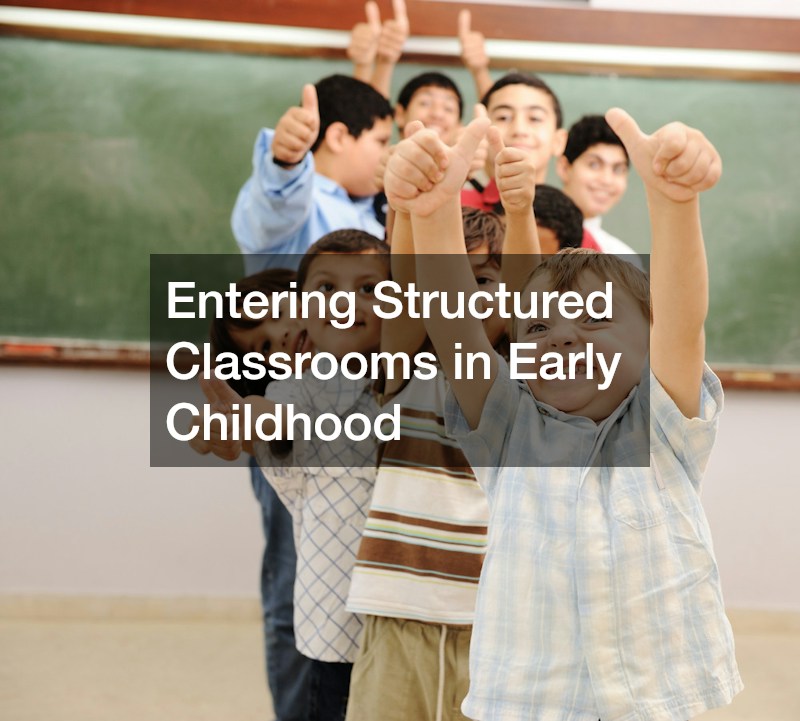
Between the ages of three and five, children typically make the transition from informal childcare or home-based care into structured early education. Enrolling a child in preschool introduces routines that bridge the gap between home and elementary school expectations. In these early classrooms, children engage with foundational pre-literacy concepts, including phonemic awareness, letter recognition, and print awareness, often woven into imaginative games and group read-alouds. Mathematics concepts are introduced through hands-on activities, such as sorting colorful buttons, counting wooden blocks, and identifying basic geometric patterns in the classroom.
Equally critical is the rich social learning that unfolds during these active years. Within a group setting, young students learn how to follow multi-step directions, wait patiently in line, listen while others speak, and resolve playground disagreements using verbal communication. Early educators carefully guide children through essential self-help habits, such as putting on jackets, opening lunch containers, and tidying work areas when an activity concludes. These simple routines cultivate self-confidence, personal responsibility, and pride in one’s growing capabilities. When children handle classroom expectations and build friendships, school becomes a place of joy and discovery. This positive mindset establishes a foundation for formal primary education.
Embracing Dual Language Immersion for Cognitive Flexibility
During early childhood, the brain exhibits remarkable neuroplasticity, creating a brief window for effortless second-language acquisition. Recognizing this advantage, many families seek out a local bilingual program to immerse young learners in dual-language settings. In these classrooms, students hear, process, and speak two distinct languages throughout the standard school day. Rather than memorizing vocabulary flashcards or analyzing complex grammar rules in isolation, children absorb language through authentic social interaction, storytelling, science demonstrations, and collaborative art projects.
Cognitive research confirms that early dual-language exposure provides advantages far beyond conversational fluency. Children who navigate two language systems develop enhanced executive functioning, superior working memory, and strong selective attention skills. Because these students constantly evaluate which language code to employ in different contexts, their brains become adept at flexible problem-solving and divergent thinking. Furthermore, early language immersion cultivates deep empathy and cultural awareness, as children learn that there are diverse ways to describe and interpret the surrounding world. In addition, developing multi-language proficiencies early in life instills lasting confidence during social interactions. Parents who prioritize bilingual learning in the early years equip their children with communication skills that will serve them through their school careers and into adult life.
Establishing Academic Groundwork in the Primary Grades
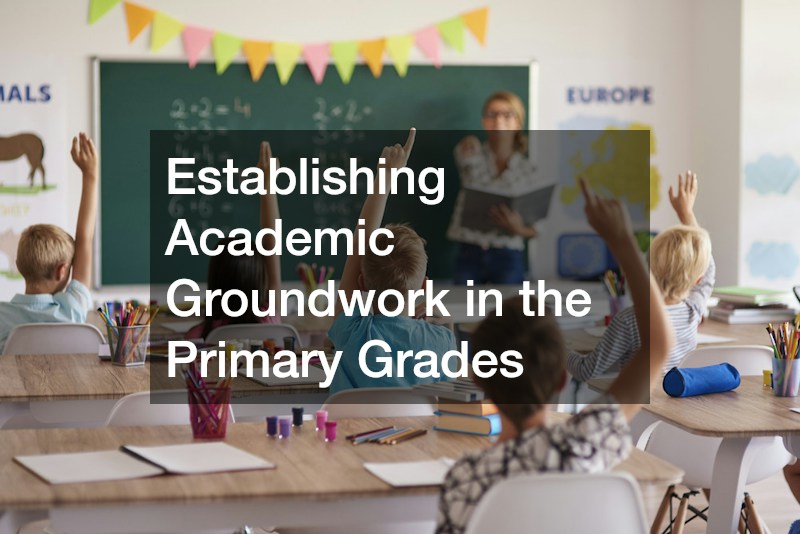
The move into kindergarten and the early elementary grades represents a major milestone in a young student’s life, shifting them into full-day academic environments with explicit curricular benchmarks. During this transition, families research options to identify the best elementary school for their child’s unique learning temperament. In these crucial primary years, students build foundational literacy and numerical fluency through systematic reading programs, writing workshops, and conceptual math curricula. They learn to move from learning to read toward reading to learn, unlocking the ability to study science, history, and literature independently.
Beyond test scores and academic metrics, the broader school environment plays an essential role in cultivating an enduring enthusiasm for learning. Exceptional elementary schools cultivate an inviting, inclusive classroom atmosphere where curiosity is celebrated and intellectual risks are met with encouragement. Skilled primary teachers introduce hands-on science experiments, community projects, and creative visual arts, ensuring that education remains dynamic and engaging. Furthermore, effective elementary campuses foster robust partnerships with families, maintaining clear lines of communication regarding academic progress and social adjustment. When children feel secure and challenged in elementary school, they develop study habits and confidence that carry them through future educational transitions.
Sustaining Academic Momentum and Curiosity Across Breaks
Long summer breaks offer students a necessary pause from homework, tests, and rigid schedules, allowing them to rest and spend time with family. However, extended periods without intellectual stimulation often result in measurable academic regression, commonly described as summer learning loss. To prevent this setback while keeping summer exciting, many parents enroll their children in an enriching day camp. These daytime programs offer an ideal combination of outdoor physical exercise, creative exploration, and cooperative group projects without the pressure of formal grades or high-stakes assessments. Camp environments provide children with opportunities to pursue interests that may not receive extensive time in standard school curricula, including robotics, environmental science, theater arts, and team sports.
Beyond keeping academic skills sharp, summer camps help children build adaptability and interpersonal resilience. Campers regularly meet new peers from diverse neighborhoods and interact with enthusiastic camp counselors who serve as positive role models. Navigating these new social groups encourages children to practice empathy, teamwork, and conflict resolution in casual, supportive settings. Outdoor team activities build motor skills, body awareness, and healthy fitness habits, while arts projects foster creative problem-solving. By remaining engaged in structured, communal activities over the summer, students avoid the lethargy and screen fatigue that often accompany idle breaks. When autumn arrives, children who attended structured summer programs return to the classroom refreshed, confident, and ready for new academic challenges.
Navigating the Middle School Shift and Changing Academic Needs
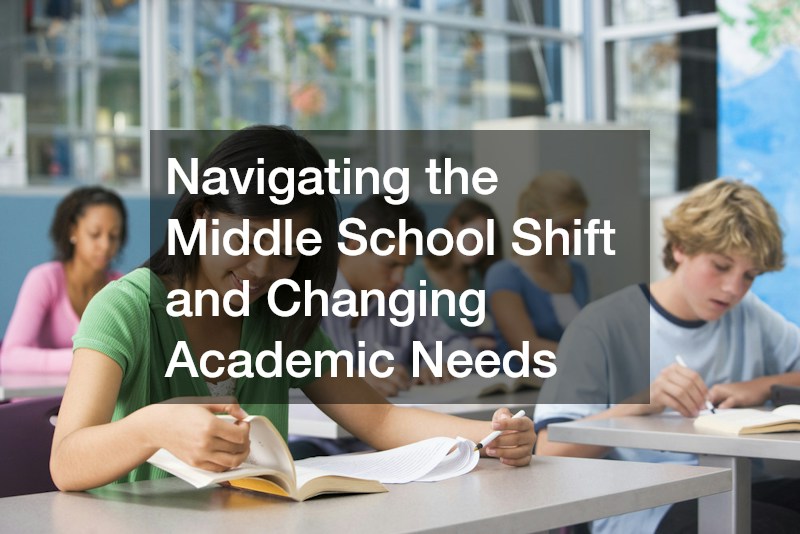
The transition from elementary school to middle school coincides with the start of early adolescence, a period characterized by major physical changes, emotional growth, and shifting social dynamics. Academic demands expand rapidly as students transition from having a single primary teacher to managing multiple instructors, departmentalized subjects, and distinct homework requirements. During this transitional phase, some families discover that local public options may not provide the close mentorship or customized pacing their child requires, prompting them to explore a private school education. Independent learning environments frequently offer smaller class sizes, allowing teachers to monitor student comprehension closely and provide timely academic intervention before minor misunderstandings turn into significant obstacles.
Middle school is also the decisive period when study skills, organizational systems, and time-management strategies become indispensable. Students must learn how to track assignments across multiple classes, study for cumulative examinations, and plan multi-stage research projects. Exemplary schools support young adolescents by teaching explicit executive functioning skills through advisory programs, organizational workshops, and structured homework planners. Teachers also introduce structured note-taking methods and test revision habits that build long-term academic endurance. When middle school educators emphasize both rigorous academic preparation and empathetic personal guidance, students navigate these transitional years with greater stability, self-confidence, and intellectual curiosity.
Considering Independent Secular Academic Environments
When exploring independent education options, many families intentionally search for schools that provide academic rigor without any religious affiliation or doctrinal instruction. Researching non religious private schools enables parents to locate institutions dedicated to secular inquiry, critical thinking, and diverse cultural perspectives. These campuses typically embrace inquiry-based learning models that challenge students to question assumptions, evaluate empirical evidence, and engage in thoughtful, civil debate with their peers across a wide range of subjects. These dynamic programs encourage rigorous inquiry across humanities and laboratory sciences alike.
Secular independent schools often approach ethics, civic engagement, and community service through a universal, humanistic framework. Students in these dynamic classrooms explore world history, read literature from diverse cultures, and study scientific disciplines grounded firmly in modern empirical research. Moreover, because these independent schools operate free from denominational mandates, their faculty members possess the academic freedom to develop creative, interdisciplinary courses that address complex contemporary challenges, such as environmental sustainability, technological ethics, and global economics. For families seeking an education anchored in logic, science, and inclusive ethics, secular independent academies represent an intellectually vibrant pathway for the middle grades.
Stepping Up to the Demands of Secondary Education

Entering the ninth grade represents a major leap in academic accountability, personal responsibility, and long-term planning. Every grade and credit earned throughout high school appears directly on a student’s permanent transcript, which college admissions committees and employers review with care. Secondary students must quickly adjust to higher workloads, faster instructional pacing, and increasingly complex course materials. This pivotal stage also demands greater personal initiative, as teenagers must learn how to communicate directly with teachers, seek extra help during office hours, and independently track deadlines for long-term projects and research papers.
Secondary education is also a vital period of personal identity exploration, where students identify their unique talents and consider future career paths. Comprehensive secondary programs offer varied elective courses, ranging from computer programming and psychology to debate, journalism, and advanced studio arts. Participating in student government, varsity athletics, performing arts, and community volunteer groups teaches teenagers how to balance competing commitments while developing leadership abilities and collaborative skills. During these four years, parents gradually transition from daily managers into trusted sounding boards, providing thoughtful guidance from the sidelines while allowing teenagers to take full ownership of their academic journey.
Structuring Advanced Pathways for University Readiness
For families aiming at selective universities and competitive degree programs, secondary academic planning requires deliberate alignment with higher education standards. Choosing an established college preparatory school provides students with a specialized academic curriculum designed specifically to meet the rigorous expectations of top-tier colleges and universities. These institutions typically offer an extensive selection of Advanced Placement courses, International Baccalaureate diploma options, and opportunities for dual enrollment with regional colleges. In these classrooms, faculty members challenge students to compose substantive analytical essays, conduct original scientific research, and participate in seminar-style discussions modeled after undergraduate courses.
Equally beneficial is the comprehensive college counseling and advising infrastructure embedded within a dedicated preparatory institution. Experienced college counselors work closely with each student to map out four-year course schedules, prepare for standardized admissions exams, develop tailored college lists, and refine personal application essays. Students also learn how to build cohesive extracurricular resumes that highlight authentic passions and sustained community leadership rather than superficial involvement in numerous clubs. By immersing themselves in an educational environment where peers and faculty alike share a commitment to academic excellence, students cultivate the work ethic, intellectual stamina, and maturity required to succeed in higher education and meaningful careers.